
 Insurance & Claims
How to File a Roof Insurance Claim After a Hail Storm (Step by Step)
A clear, honest walkthrough of the whole process, from the first inspection to the final depreciation check, so a legitimate hail claim does not get underpaid or denied on a technicality.



 Licensed & Insured
NC #85568
By Patriots’ Roofing · Updated June 2026 · Insurance & Claims
TL;DR: To file a roof insurance claim after a hail storm, start with a free, photo-documented roof inspection, decide whether the damage clears your deductible and is worth filing, then report the claim to your carrier before your policy’s deadline (often one year from the date of loss). Meet the adjuster on the roof with your contractor, review the approved scope, rebuild to current code, and submit for the held-back depreciation once the work is finished. No honest contractor can guarantee approval; the carrier decides.
First question: is your hail damage worth filing a claim?
Not every hailstorm gives you a claim, and a good roofer will say so. Hail damage to asphalt shingles shows up as soft bruises where the granules are knocked loose and the mat underneath is fractured, and it almost never looks like much from the driveway. The honest place to start is a free inspection, before you ever call your carrier, so you know what is actually on the roof and roughly what it will take to fix it. Then you weigh that against your deductible. If a handful of isolated dents will not exceed what you would pay out of pocket, filing may not make sense and only puts a claim on your record. If the bruising is widespread, granules are washing into the gutters, and the soft metals are dented, filing is usually the right call. Hail is a fact of life across our markets, from West Texas, where we handle hail and insurance claims in Lubbock, to the coast, where we manage storm damage repair on the Outer Banks, so we have walked a lot of homeowners through this exact decision.
How to file a hail damage roof claim, step by step
Here is the path from the first ladder to the final check. It is the same process whether you are in Lubbock, Lafayette, or Kitty Hawk, and it works best when your contractor and your adjuster are looking at the same roof at the same time.
Get a free, documented inspection
Before you call your carrier, have a roofer climb up and photograph every slope. Hail rarely shows from the ground, so you want to know what is really there, and whether it clears your deductible, before a claim is on your record.
Decide whether it is worth filing
Compare the likely scope against your deductible. Isolated cosmetic dents may not be worth a claim; widespread bruising and granule loss usually are. We give you the photos and a straight answer so the decision is yours.
Report the claim to your carrier
File within your policy’s deadline, commonly one year from the date of loss. You get a claim number and an assigned adjuster. Have the storm date and your inspection photos ready when you call.
Meet the adjuster on the roof
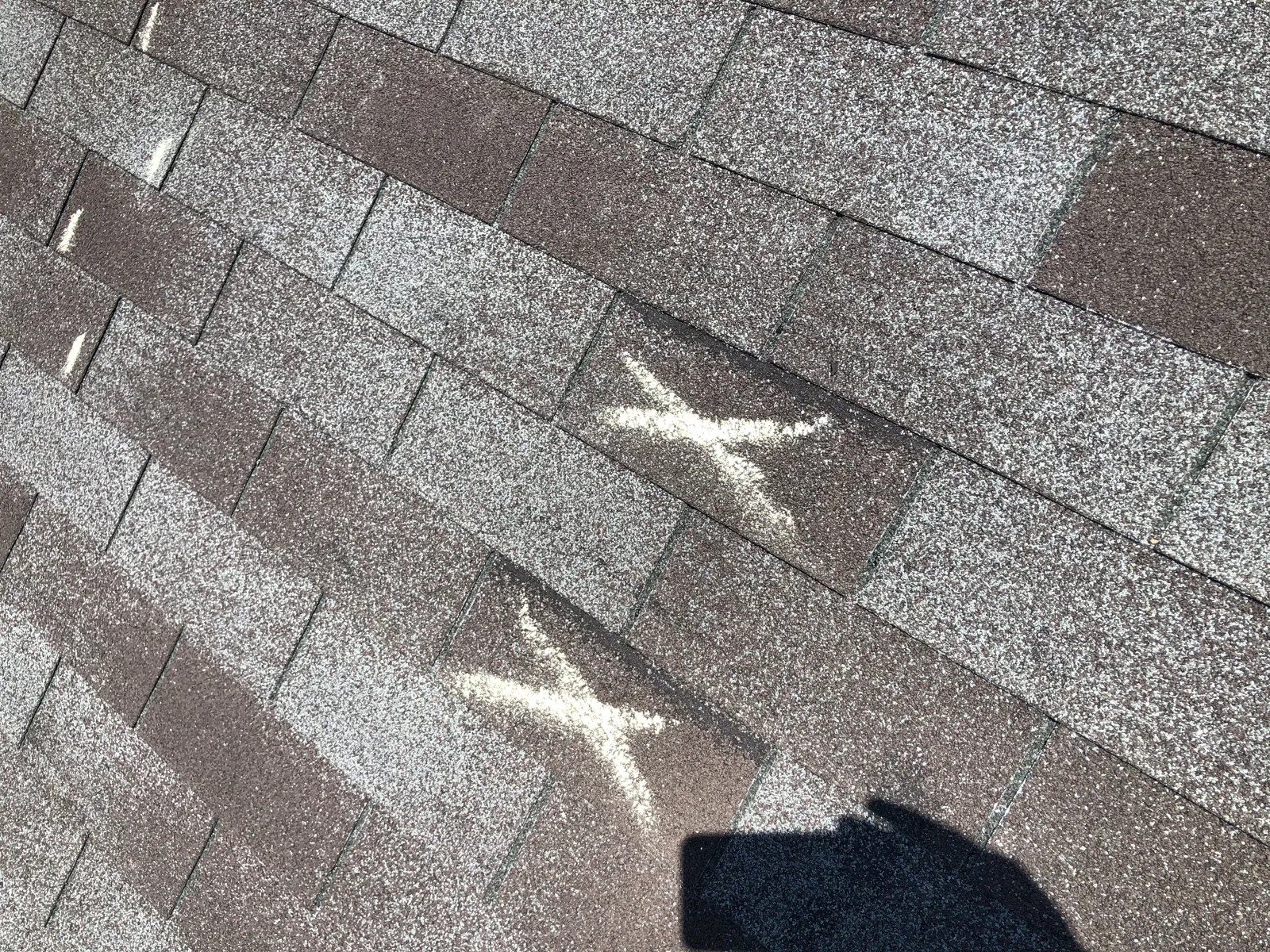
We meet your adjuster on the roof so you both see the same hail strikes, marked in chalk, and the full scope stays on the record instead of getting underscoped from the ladder.
Review the approved scope
Once the carrier approves, we go through the scope line by line, flag anything missed, and file a supplement for legitimate items or code-required upgrades the first estimate left out.
Rebuild to code, release depreciation
Our GAF-certified crews rebuild to current code. On a replacement-cost policy, the carrier releases the held-back depreciation once the work is finished and the final invoice is submitted.
The documentation that actually wins a hail claim
Approvals turn on evidence, not opinions. The stronger and more specific your documentation, the harder it is for a claim to be underscoped or written off as old wear. This is the file we build on every hail inspection:
- Dated photos of hail bruising on every slope, each strike marked in chalk
- Close-ups of the soft metals (vents, gutter aprons, flashing) that dent before shingles do
- The date of loss tied to a verifiable hail report for your specific address
- Collateral damage: window screens, AC condenser fins, fence caps, painted surfaces
- Granule loss collecting in gutters and at the downspout splash blocks
- Any interior signs of leaks, such as ceiling stains or fresh attic moisture
- A measured roof diagram and the full repair scope, in writing
Talk to a local roofing and claims expert
Think the last hailstorm hit your roof? Let a fifth-generation, family-owned, GAF-certified crew climb up, document the damage, and stand with you through your insurance claim. One free inspection tells you where you stand.
Get My Free Estimate → Or call us(844) 585-7663The adjuster meeting is where claims are won or lost
The single biggest difference between a fully-paid claim and an underpaid one is whether someone who knows roofs is on the roof when the adjuster is. Adjusters are covering many properties and often inspect quickly, sometimes from a ladder or with a drone, and hail damage is genuinely easy to miss. When we meet your adjuster on site, we walk the slopes together, point to the marked strikes, show the dented soft metals, and make sure wind-driven and collateral damage are all part of the same conversation. We are not there to argue; we are there so the documented loss reflects what the storm actually did. Our team that handles storm damage and insurance claims does this every week, and it is the step homeowners most often skip to their own cost.
Approved scope, supplements, and releasing your depreciation
An approval is the start of the conversation, not the end of it. The first estimate an adjuster writes is sometimes missing code-required items, things like updated ice-and-water shield, drip edge, a layer of decking, or proper step flashing, and your contractor’s job is to document those and file a supplement so the scope matches what it truly takes to rebuild the roof correctly. Most modern homeowner policies are replacement-cost (RCV) policies: the carrier first pays the depreciated (ACV) value, holds back the depreciation, then releases that held-back amount once the work is complete and invoiced. You pay your deductible, and the carrier pays the rest in those two installments. If you want the longer version of how coverage works, our companion guide answers does insurance cover roof replacement in plain terms.
If the hail claim means a full re-roof and you own an eligible coastal home, it is also the right moment to consider rebuilding to the IBHS FORTIFIED standard. In North Carolina, that upgrade may be partly funded by the Strengthen Your Roof grant (up to $10,000 on the Outer Banks and Barrier Islands) or the Strengthen Your Coastal Roof grant (up to $6,000 in the mainland coastal counties); in Louisiana, the state Fortify Homes Program offers up to $10,000. Those programs are wind-focused and separate from your hail claim, but if you are already re-roofing, they are worth knowing about, and as an IBHS FORTIFIED Certified installer we can build to the standard they require.
The deadlines you cannot afford to miss
Insurance claims run on a clock, and two dates matter most. The first is the date of loss, the day the storm actually hit, which your carrier verifies against weather data for your address, so it pays to file against the right storm. The second is your policy’s reporting deadline, commonly one year from the date of loss, though some policies are shorter and Texas, North Carolina, and Louisiana each set their own legal limits on how long you have to pursue a claim. The practical rule is simple: do not sit on visible hail damage. The longer you wait, the easier it becomes for a carrier to argue the damage came from age, a later storm, or neglect, and a delay can turn a clear claim into a contested one. When in doubt, get the roof documented now, even if you decide later not to file.
Frequently Asked Questions
How long do I have to file a hail damage roof claim?
Most policies require you to report within one year of the date of loss, and some windows are shorter, so check your declarations page. Do not wait. The sooner you document hail damage and file against the correct storm date, the harder it is for a carrier to attribute the damage to age or a later event. A free inspection puts the damage on the record early.
Will filing a hail claim raise my rates or get me dropped?
We cannot speak for your carrier, and we will not pretend to. Hail is generally treated as a non-preventable act of nature, but rating practices vary by company and by state. That is exactly why the first step is an honest inspection: if the damage will not clearly exceed your deductible, we tell you, so you can decide whether filing makes sense for your situation.
Can a roofer guarantee my hail claim will be approved?
No, and anyone who promises approval, a free roof, or that they will waive your deductible is a red flag. Approval is the carrier’s decision. What an honest, certified contractor does is document the damage thoroughly, meet the adjuster on the roof, and supplement legitimately, which gives a real claim its best chance. Waiving or absorbing a deductible is illegal in many states.
Do I have to use the contractor my insurance company suggests?
No. You choose who repairs your roof. Your carrier pays the covered scope regardless of which licensed contractor you hire. Choosing a local, GAF-certified company that stands behind a real manufacturer warranty matters far more over the next twenty years than which name an adjuster happened to mention.
What if my hail claim gets underpaid or denied?
A first estimate that misses code items or underscopes the damage is common, and the supplement process exists to correct it. We document the gaps and submit them. If a legitimate claim is wrongly denied, you have options, including re-inspection and, in some cases, the appraisal clause in your policy. We handle the roofing documentation; for disputes with legal weight, involve a licensed professional.
Keep Reading
- Storm damage and insurance claims – how our team documents the loss and works your claim end to end.
- Does insurance cover roof replacement – RCV versus ACV, deductibles, and what is actually covered.
- Hail and insurance claims in Lubbock – the West Texas storm-claim process, locally handled.
- Storm damage repair on the Outer Banks – coastal wind and hail claims on the NC barrier islands.
Hail Hit? Find Out If You Have a Claim Worth Filing
Let a fifth-generation, family-owned, GAF-certified crew document the damage and stand with you through your insurance claim. One free inspection tells you exactly where you stand, with no cost and no obligation.