
 Storm & Seasonal
Hurricane Roof Prep for Coastal North Carolina Homeowners
A clear, do-it-before-the-storm checklist for getting your Outer Banks or Eastern NC roof ready for hurricane season, plus the one upgrade that beats every other prep step.

 Licensed & Insured
NC #85568
By Patriots’ Roofing · Updated June 2026 · Storm & Seasonal
TL;DR: The best time to do hurricane roof prep on the North Carolina coast is before the first named storm. Inspect the roof (or have a pro do it) for loose shingles, lifted flashing, and rattling soft metals; trim overhanging limbs; clear the gutters; and photograph everything for a clean insurance claim. The single strongest step is a FORTIFIED roof. A sealed deck, ring-shank nails, and reinforced edges keep it on in hurricane-force wind, and the NC grant can help pay for it.
Why hurricane prep starts at the roof
On the Outer Banks and up and down the Eastern North Carolina coast, the roof is the first thing a hurricane attacks and the first thing to fail. The damage that turns a storm into a major loss almost always starts overhead. Wind peels back a few shingles, lifts a strip of flashing, or catches a loose ridge vent, and then wind-driven rain pours into the attic and down the walls. Get the roof right before the season and most of that risk disappears. The Atlantic hurricane season runs June 1 through November 30, so the time to prepare is on a calm, clear day, not when a forecast cone is already pointed at your county.
Your pre-season roof prep checklist
Work through this list before June, or as soon as you can after. Most of it you can eyeball from the ground; the parts that need a ladder or a steep coastal roof are worth handing to a professional.
- Inspect the field and ridge. Look for cracked, curled, lifted, or missing shingles, and check the gutters for granule buildup. A few loose shingles are the exact entry point wind needs.
- Check the flashing and penetrations. Flashing around chimneys, skylights, valleys, and pipe boots is where most leaks begin. Re-seal or replace anything lifted, rusted, or cracked.
- Secure the soft metals. Drip edge, gutters, ridge vents, and gable trim loosen over time. Re-fasten or replace anything that rattles; in a hurricane a loose piece of metal becomes a projectile.
- Trim back trees. Cut limbs that overhang or touch the roof. Falling branches and wind-whipped limbs cause a large share of coastal roof damage every season.
- Clear gutters and drains. Packed gutters push water under the edge and into the fascia. Flush them so the roof can shed the rain a tropical system dumps.
- Check the attic. After a rain, look for daylight, water stains, and damp insulation. A small active leak now becomes a major one under storm load.
- Confirm insurance and documentation. Know your wind and hail deductible before the storm, and keep your policy number and agent contact where you can find them.
Document your roof before the storm hits
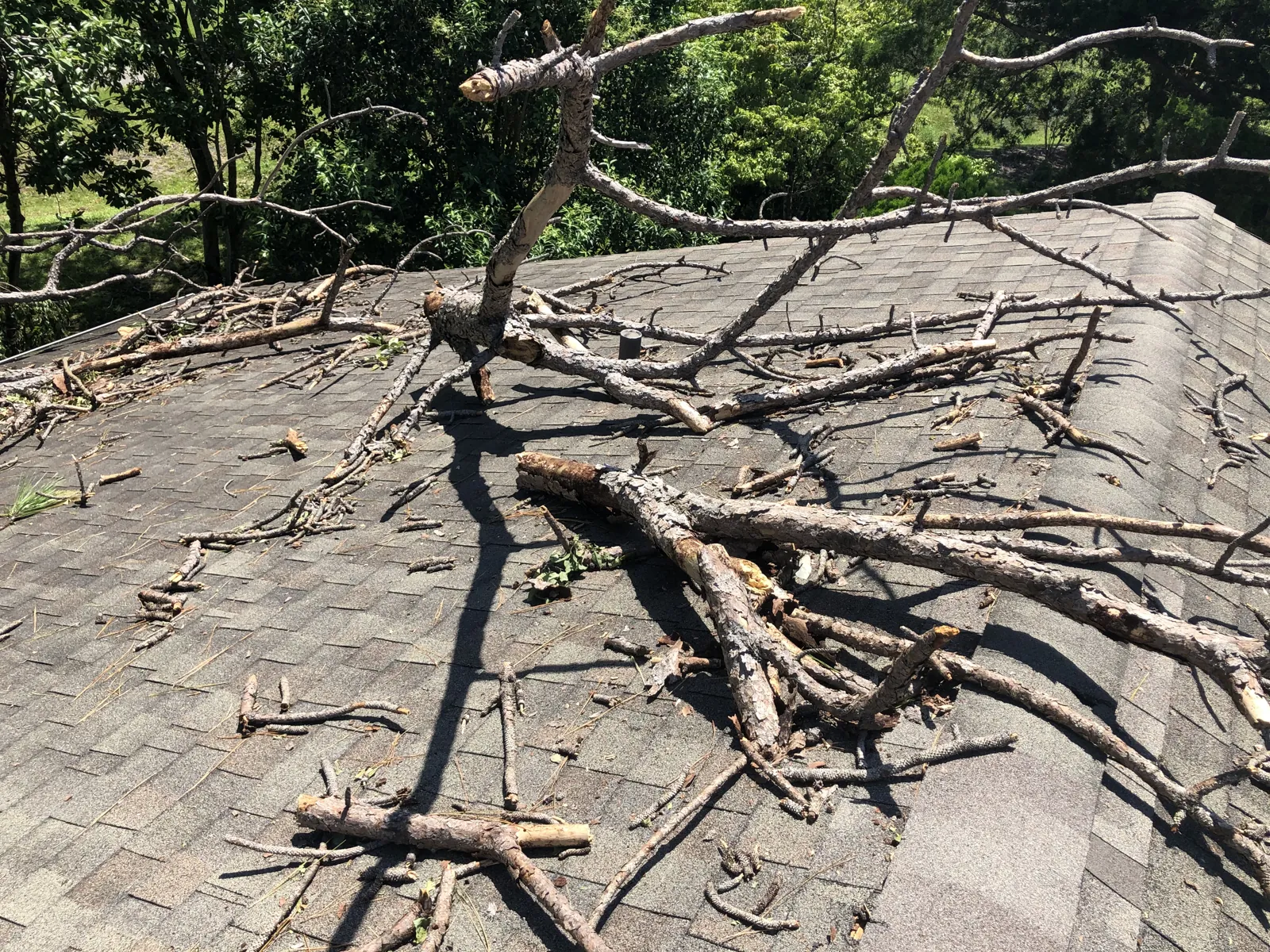
The cheapest insurance you have is a phone full of photos taken on a clear day. Before the season, walk the property and photograph the roof from the ground on every side, then add close-ups of the shingles, flashing, gutters, and any existing wear. Save the date stamps. If a hurricane damages the roof, those before photos let your adjuster separate new storm damage from old wear, which is the single most common fight in a coastal claim. When the storm passes, photograph the damage before you make any temporary repairs, get a tarp on active leaks if it is safe to do so, and then call a local roofer. For exactly what to do after a hit, see our guide to storm damage roof repair on the Outer Banks.
A FORTIFIED roof is the strongest prep of all
Inspecting and tightening an existing roof lowers your risk; a FORTIFIED roof is built so the risk is low to begin with. FORTIFIED is a re-roofing standard from the Insurance Institute for Business & Home Safety, engineered specifically for hurricane country. Three upgrades do the heavy lifting:
- A sealed roof deck. The seams between the deck panels are taped so the home stays dry even if the shingles blow off in a storm.
- Ring-shank nails on a tighter pattern. These threaded nails grip far better than smooth nails, so the roof resists the uplift that pries an ordinary roof loose.
- Reinforced, locked-down edges. The edge is where wind gets its first grip, so FORTIFIED hardens the drip edge and starter course where failure usually begins.
The result is a roof engineered to stay on in hurricane-force wind and keep water out when an ordinary roof would already have failed. Read the full standard on our FORTIFIED roofing page.
The NC grant can help pay for it
North Carolina wants coastal roofs built to this standard, so the state helps fund them. The program reimburses up to $10,000 toward a new FORTIFIED roof on the Outer Banks and Barrier Islands, and up to $6,000 in the mainland coastal counties. The roof has to earn the FORTIFIED designation and be installed by an IBHS-certified contractor to qualify, and funds are first-come while they last. For many coastal homeowners that turns the strongest possible hurricane prep into one of the most affordable. The territories, dollar amounts, and eligibility are spelled out on our page for the NC FORTIFIED grant.
When to get it done
Hurricane prep is a sequence, not a single afternoon. Here is the order that works on the coast:
- Late winter to early spring. Schedule a professional roof inspection while crews are open and before the rush.
- Spring. Make repairs (shingles, flashing, soft metals) and trim trees while the weather is calm.
- Before June 1. Clear the gutters, document the roof with photos, and confirm your insurance deductible.
- During the season. After any strong blow, do a quick ground check and clear debris off the roof and out of the gutters.
- After a hit. Photograph the damage, tarp active leaks if it is safe, and call a local roofer for a full inspection.
Gulf Coast homeowners, the same rules apply
If you are reading this from the Louisiana Gulf Coast, the threat is the same and so is the playbook. Inspect, tighten, trim, document, and build to a stronger standard wherever you can. Wherever you are on the coast, the principle holds: the roof you prepare before the season is the one that survives it.
Patriots’ Roofing is a family-owned, fifth-generation company, founded by the O’Brien family in 1836, running local Eastern North Carolina crews rather than chasing storms across the bridge. We are GAF Master Elite and President’s Club, an IBHS FORTIFIED certified installer, BBB A+ accredited, and rated 4.9 on Google, and we are proud to serve the veterans, first responders, and military families all along the coast. Have us inspect your roof before the next named storm; the estimate is free.
Talk to a local roofing expert
Beat the season. A local, IBHS-certified Patriots’ Roofing estimator will inspect your roof, flag the loose shingles, flashing, and soft metals a hurricane will find, and show you whether a FORTIFIED roof and the NC grant make sense for your home, all at no charge.
Get My Free Estimate → Or call us(844) 585-7663Frequently Asked Questions
When should I prep my roof for hurricane season?
Before the first named storm. The Atlantic hurricane season runs June 1 through November 30, so schedule an inspection and any repairs in late winter or spring while crews are available and the weather is calm. Waiting until a storm is in the forecast leaves no time to fix loose shingles, flashing, or soft metals.
What is the most important hurricane roof prep step?
Tighten everything wind can grab. Re-secure or replace loose shingles, lifted flashing, and rattling soft metals like drip edge, gutters, and ridge vents, then trim overhanging limbs. The strongest step of all is a FORTIFIED roof, which is engineered with a sealed deck, ring-shank nails, and reinforced edges to stay on in hurricane-force wind.
Should I photograph my roof before a hurricane?
Yes. Clear-day before photos are the easiest way to win a coastal insurance claim. They let the adjuster separate new storm damage from old wear, which is the most common dispute. Photograph every side from the ground plus close-ups of the shingles, flashing, and gutters, and keep your policy number and deductible handy.
Does a FORTIFIED roof really help in a hurricane?
Yes. FORTIFIED is an IBHS engineering standard built for hurricane country. The sealed deck keeps water out even if shingles blow off, ring-shank nails resist uplift far better than smooth nails, and locked-down edges remove the first place wind gets a grip. North Carolina’s grant reimburses up to $10,000 on the Outer Banks and Barrier Islands and up to $6,000 in mainland coastal counties toward one.
What should I do right after hurricane damage?
Stay safe first, then document. Photograph the damage before any temporary repairs, get a tarp on active leaks if it is safe, and call a local roofer for a full inspection. A local, IBHS-certified crew can assess the roof and help with the insurance claim. See our storm damage roof repair guide for the full process.
Keep Reading
- Storm damage roof repair on the Outer Banks – what to do after a hurricane hits your roof, from tarp to claim.
- FORTIFIED roofing – the IBHS building standard engineered to keep a coastal roof on in high wind.
- The NC FORTIFIED grant – how the $6,000 and $10,000 reimbursements work and who qualifies.
Get Your Coastal Roof Ready Before the Next Storm
A local, IBHS-certified, family-owned crew will inspect your roof, handle the repairs that matter, and show you how a FORTIFIED roof and the NC grant fit your home. No obligation.