
 Storm & Seasonal
How to Tell If Your Roof Has Hail Damage (10 Signs)
Hail rarely leaves obvious holes. It leaves bruises, dents, and granule loss you have to know how to read, so here are the ten signs that matter.



 Licensed & Insured
NC #85568
By Patriots’ Roofing · Updated June 2026 · Storm & Seasonal
TL;DR: To tell if your roof has hail damage, look for dented gutters, downspouts, and soft metals (vents and flashing), bruised or fractured shingles, granule loss piling in gutters, cracked shingles, exposed black mat, flattened AC fins, dinged screens, splatter marks, and fresh interior leaks. Most hail damage is invisible from the ground, so the only reliable way to know is a free, on-the-roof inspection.
The ten signs of hail damage
Hail almost never punches a clean hole through a shingle. Instead it knocks the protective granules loose, bruises the asphalt mat underneath, and dents every soft metal surface it touches. The result is damage that looks like nothing from the driveway but shortens your roof’s life and opens the door to leaks. Run through these ten signs after any hail event, starting with the ground-level clues you can safely check yourself.
- Dented gutters and downspouts. Gutters and downspouts are the easiest hail evidence to read from the ground. Run your eye along the top edge and the round face of the downspout for dimples and dents.
- Dents on soft metals. Roof vents, turbine and turtle vents, valley metal, and flashing dent before shingles show damage. Fresh, shiny dents in these metals are a strong tell.
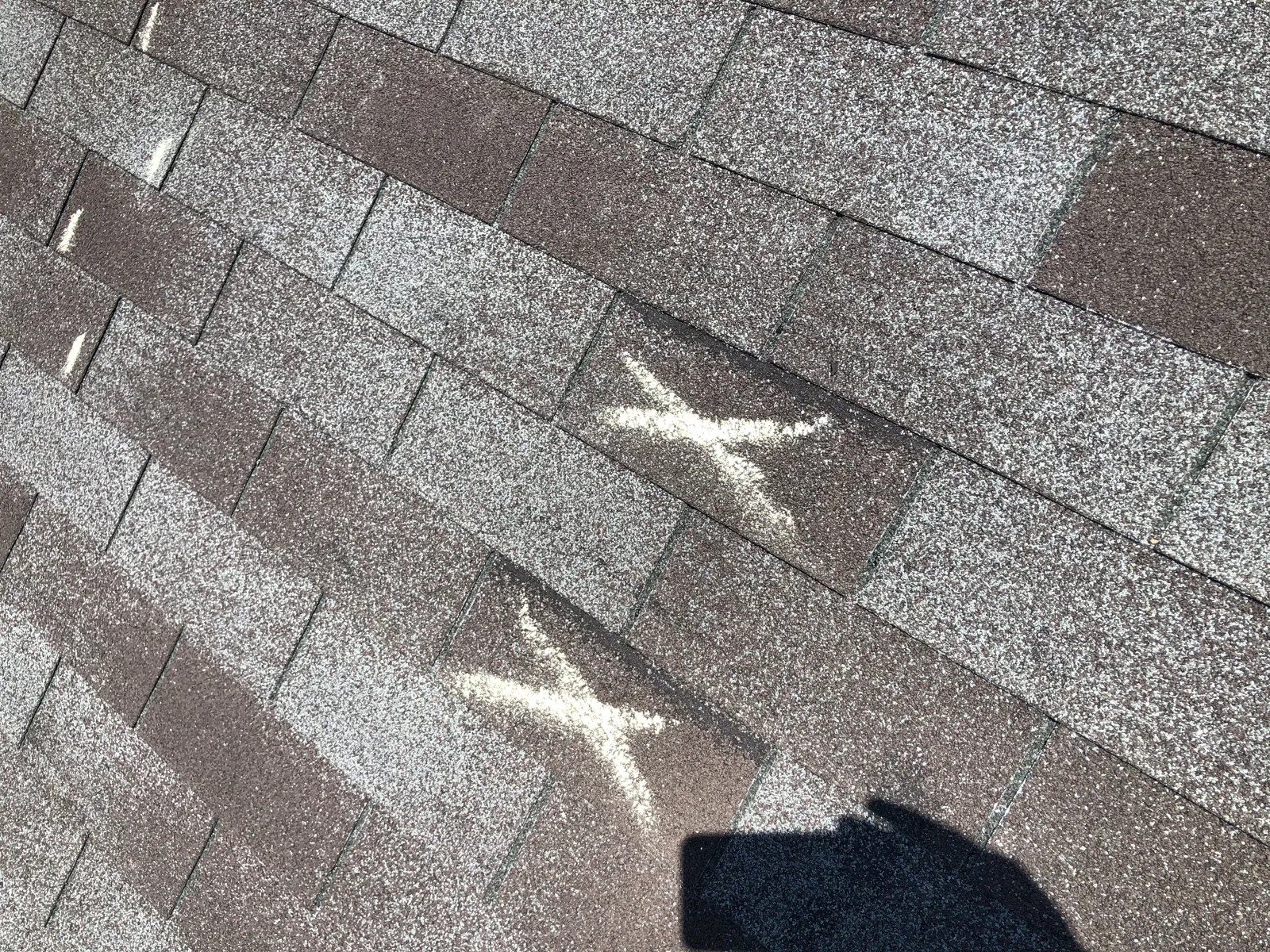
- Bruised or fractured shingles. A hail bruise feels soft or spongy, like the give in a fresh apple. The mat beneath is fractured even when the surface looks intact.
- Granule loss in the gutters. Piles of sand-like granules at downspout outlets right after a storm mean hail stripped the shingle surface. Heavy fresh accumulation is a red flag.
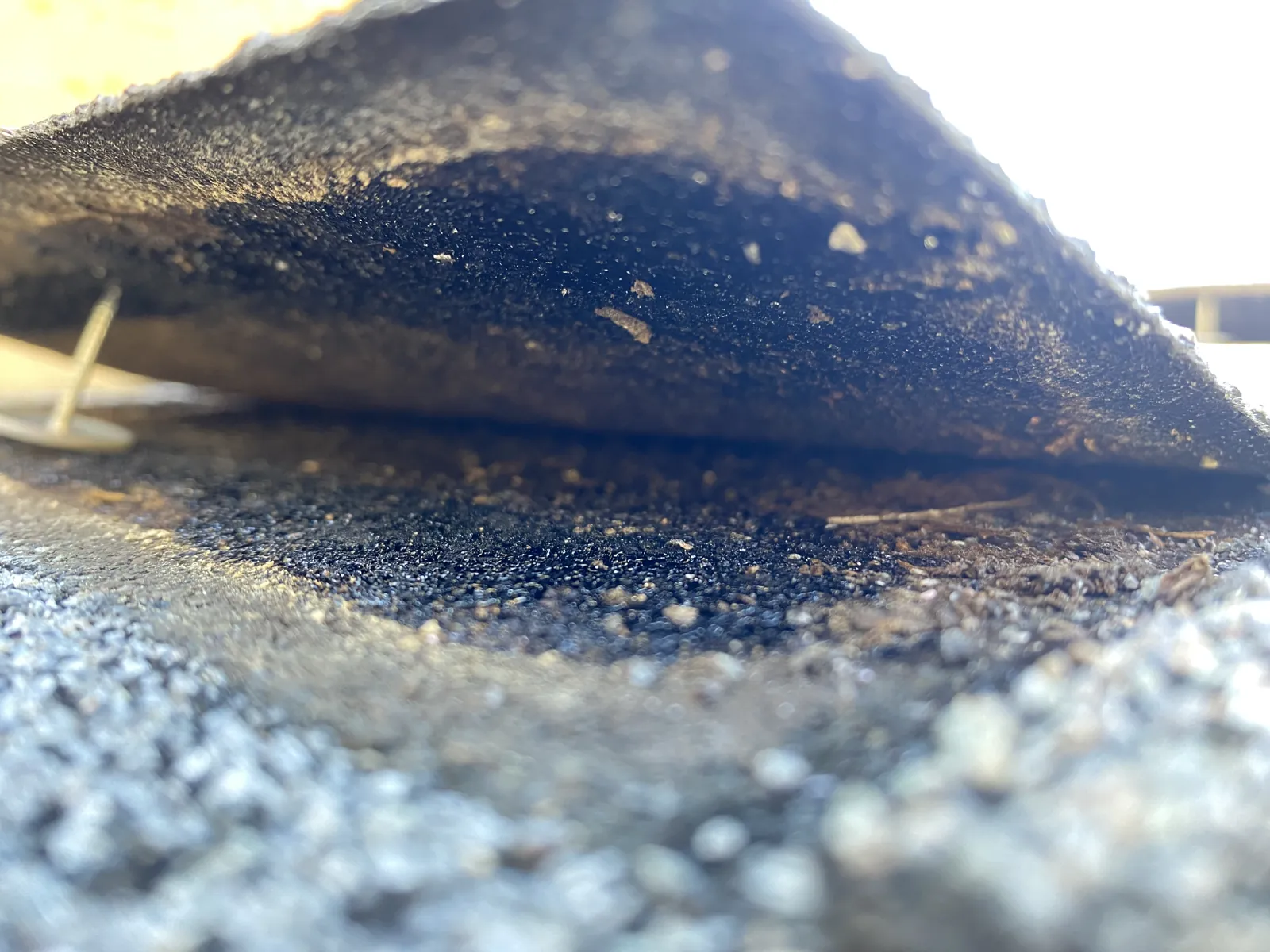
- Cracked or split shingles. Large hail can crack a shingle outright or split it along the seal line, leaving pieces that lift in wind.
- Exposed asphalt mat. Round black spots where the granules were knocked away expose the bare asphalt to UV and accelerate failure.
- Flattened AC and metal fins. The aluminum fins on your AC condenser, plus mailboxes, grills, and metal roof caps, bend and flatten under hail and serve as a useful size gauge for the storm.
- Dinged or torn window screens. Punctured or stretched window and door screens confirm hail hit hard enough to harm the roof above.
- Splatter marks. Light circular marks on painted decks, fences, siding, and the AC unit show where hailstones struck and help date the event.
- Fresh interior leaks or ceiling stains. New water spots, ceiling stains, or attic moisture after a storm mean the roof was breached and the damage is already inside.
Why ground-level checks miss real roof damage
You can confirm a storm hit your home from the yard, but you cannot confirm your roof is sound from there. Hail bruising lives on the upward-facing slopes, granule loss hides in the field of the shingle, and a fractured mat gives no clue to the naked eye until it starts leaking. Walking the property tells you whether to be concerned; it does not tell you whether you have a problem. That is the gap a professional check closes.
Not sure what the storm did to your roof?
Talk to a local storm-damage expert who gets on the roof, documents every slope, and tells you straight whether you have hail damage worth acting on. No cost, no obligation.
Get My Free Estimate → Or call us(844) 585-7663How a professional hail inspection works
A real inspection is methodical, not a quick glance from a ladder. Here is the sequence we follow, and the same one a careful insurance adjuster uses, so the damage is documented the way a carrier needs to see it.
- Ground and elevation review. We check gutters, downspouts, screens, the AC unit, and painted surfaces for the dents and splatter that confirm a hail event and its date.
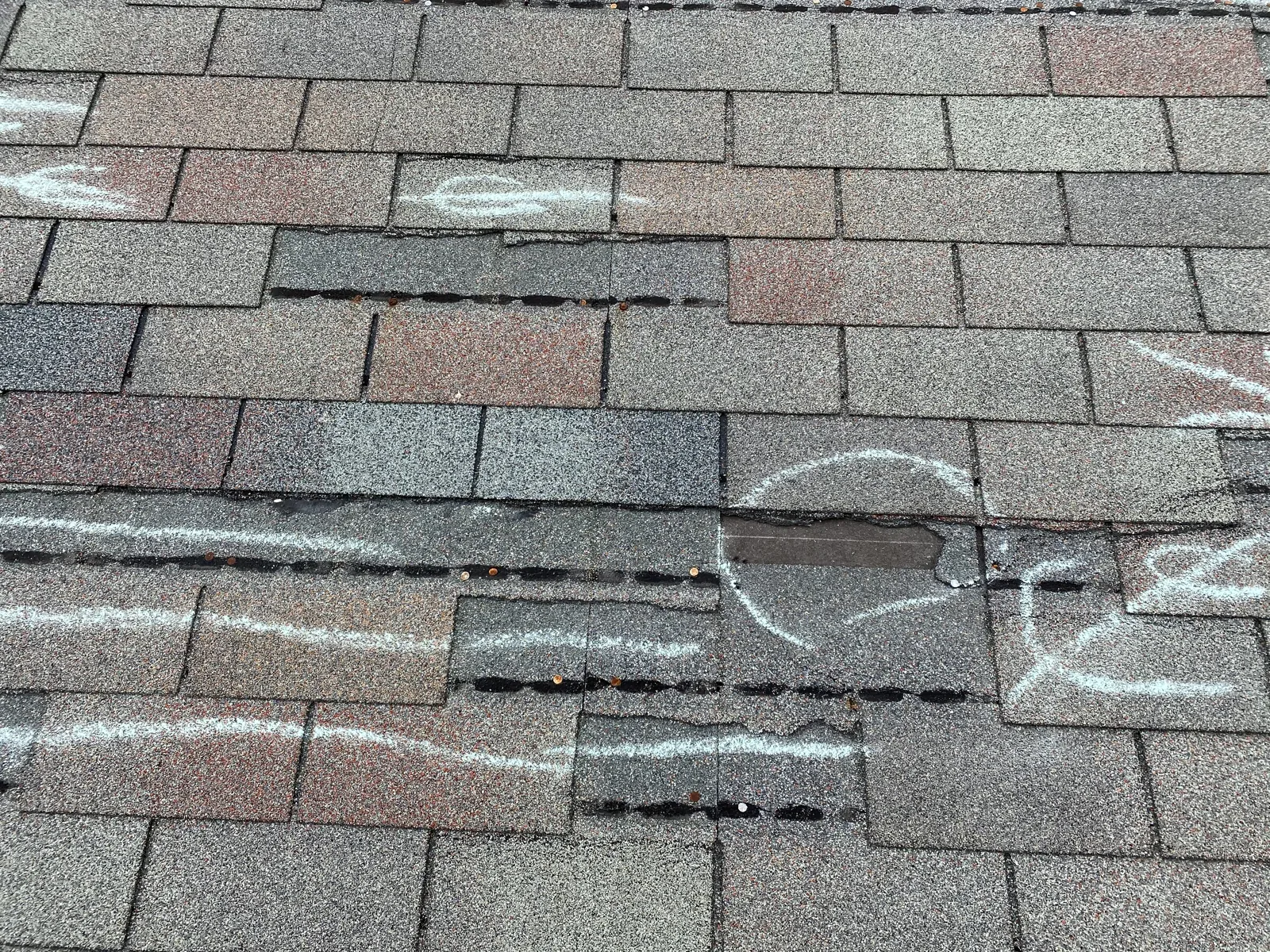
- Roof-surface walk. Each slope is walked and inspected for bruising, fractured mat, granule loss, cracks, and broken seals that ground checks cannot see.
- Soft-metal and penetration check. Vents, valleys, flashing, and pipe boots are examined for dents and impact that signal hail intensity.
- Chalk, measure, and photograph. Every strike is marked, measured, and photographed slope by slope to build a clear, dated record.
- Honest findings. You get a plain answer: real, claimable damage, minor wear to watch, or a sound roof, with the photos to back it up.
An honest word: not every storm is a claim
Plenty of homeowners call after a loud hailstorm and the roof turns out fine, and we tell them so. Small hail, a brief event, or impact-resistant shingles can all leave a roof with cosmetic marks but no functional damage. There is no point filing a claim, or paying a deductible, for a roof that does not need work. The value of an inspection is the same whether the news is good or bad: you get a definite answer instead of a guess. When the damage is real, we document it thoroughly and walk you through storm damage and insurance claims from first call to final inspection.
What to do after a hailstorm
Act while the evidence is fresh. Note the date of the storm, photograph any obvious damage from the ground, save anything that blew off, and schedule a free roof inspection before you decide whether to file. Most carriers expect you to report a loss promptly, so do not let a damaged roof sit through the next storm. If you are in West Texas, we help homeowners sort real damage from ordinary wear and handle hail claims in Lubbock every season; when it is time to file, our step-by-step guide on how to file a roof insurance claim walks you through it.
One more path worth knowing for our coastal customers: if a storm-damaged roof needs replacing, FORTIFIED grant programs are a separate source of funds from any insurance claim. North Carolina’s Strengthen Your Roof program offers up to $10,000 toward a qualifying FORTIFIED roof, a related coastal grant offers up to $6,000, and Louisiana’s Fortify Homes program offers up to $10,000 for eligible Gulf Coast homes. As an IBHS FORTIFIED certified installer, we can tell you whether your address falls in an eligible territory.
Frequently Asked Questions
How can I tell if my roof has hail damage from the ground?
From the ground you can spot the clues, not the damage itself. Check the gutters and downspouts for dents, look at metal vents and flashing for fresh dings, inspect window screens and the AC condenser fins for impact, and look for splatter marks on painted decks and fences. These confirm a hail event hit hard enough to be concerned, but the actual roof-surface bruising and granule loss sit on the upward slopes where you cannot safely see them. A roof-level inspection is the only reliable way to confirm.
What does hail damage look like on a roof?
It looks like round, dark bruises where the granules were knocked off, exposing the black asphalt mat underneath. The spots often feel soft or spongy to the touch because the mat is fractured. You will also see granules collecting in the gutters, cracked or split shingles, broken seals, and fresh dents in any nearby soft metal. Unlike wind damage, hail damage is usually scattered randomly across the slopes rather than concentrated along an edge.
How long do I have to file a hail damage claim?
Most policies require you to report a loss within a set window after the date of damage, commonly within a year, though the exact deadline varies by carrier and by state. The practical advice is to act promptly. The longer you wait, the harder it is to tie the damage to a specific storm, and a fresh, well-documented claim is far easier to approve than one filed months later.
Is minor hail damage worth filing a claim for?
Not always, and we will tell you so. Small hail or a short storm can leave cosmetic marks without functional damage, and there is no reason to file a claim or pay a deductible for a roof that does not need work. What matters is whether the impacts fractured the mat, stripped granules, or broke seals in a way that shortens the roof’s life. A free inspection gives you a definite answer either way.
Does hail damage get worse over time?
Yes. Once hail strips the granules and fractures the mat, the exposed asphalt is left open to UV and weather, so it ages and dries out faster. Broken seals let wind lift shingles, and small fractures widen into leaks. Damage that looks minor right after a storm can turn into active leaks and interior staining over the following seasons, which is why a prompt inspection pays off.
Think Hail Hit Your Roof?
Let a fifth-generation, family-owned crew get on the roof, document every slope, and tell you plainly whether you have hail damage worth acting on. One free inspection settles it.