
 Storm & Seasonal
Emergency Roof Tarping: What to Do After Storm Damage
A storm just opened your roof and water is coming in. Here is exactly what to do, in what order, to protect your family, your home, and your insurance claim.



 Licensed & Insured
NC #85568
By Patriots’ Roofing · Updated June 2026 · Storm & Seasonal
TL;DR: If a storm breaches your roof, stay safe first and keep everyone away from sagging ceilings and live wires. Stop interior water by moving belongings, catching drips in buckets, and gently draining a bulging ceiling. Photograph everything before you clean up, then call a professional for emergency tarping that same day. A properly installed tarp seals the roof and protects your home until a permanent repair can be made.
Act in this order when a storm opens your roof
When wind tears off shingles or a limb punches through the deck, the worst thing you can do is panic and climb up to fix it in the weather. The right response is calm and sequenced: protect people first, limit the water inside, document the damage, and get a trained crew to seal the roof. Working in this order keeps you safe, keeps the bill smaller, and keeps your insurance claim clean. Here is the sequence we walk homeowners through every storm season.
- Make the house safe. Keep everyone out of rooms with sagging or stained ceilings, shut off power to any area that is wet, and do not go onto a wet, damaged roof. If you smell gas or see downed lines, leave and call the utility.
- Stop the water inside. Move furniture, electronics, and valuables out of the drip zone, lay down towels or a tarp, and put buckets under active leaks. Relieve a bulging ceiling carefully so it drains instead of collapsing.
- Document everything. Photograph and video the damage inside and out, plus your wet belongings, before you move or toss anything. This record is the backbone of your claim.
- Call for professional emergency tarping. Get a licensed roofer out the same day to seal the opening with a properly anchored tarp so the next rain band does not undo everything.
- Plan the permanent repair. Once the roof is dry and tarped, schedule the real fix and let your roofer help line it up with your insurance claim.
Stop the water inside (the part you can safely do)
While you wait for a crew, your job is damage control on the inside, not roof work. A few minutes of the right moves can save flooring, drywall, and keepsakes that are far harder to replace than shingles. Stay off the roof and focus on what you can reach safely from the ground floor and, if it is safe, the attic.
- Clear the drip zone. Move furniture, rugs, electronics, and anything with sentimental or paper value well away from where water is coming in.
- Catch and channel the water. Set buckets or bins under active drips and lay towels or a plastic sheet to protect the floor underneath.
- Relieve a bulging ceiling. A ceiling holding a pocket of water can collapse. From a safe position, pierce the lowest point of the bulge with a small hole so it drains into a bucket in a controlled way.
- Check the attic if it is safe. If you can reach the attic without standing water or live wiring, place a container under the leak and pull insulation back from the wet area so it can dry.
- Do not climb onto the roof. Wet, storm-damaged shingles are slick and unstable, and a fall is a far bigger emergency than a leak. Leave the roof to a crew with fall protection.
Document everything before you clean up
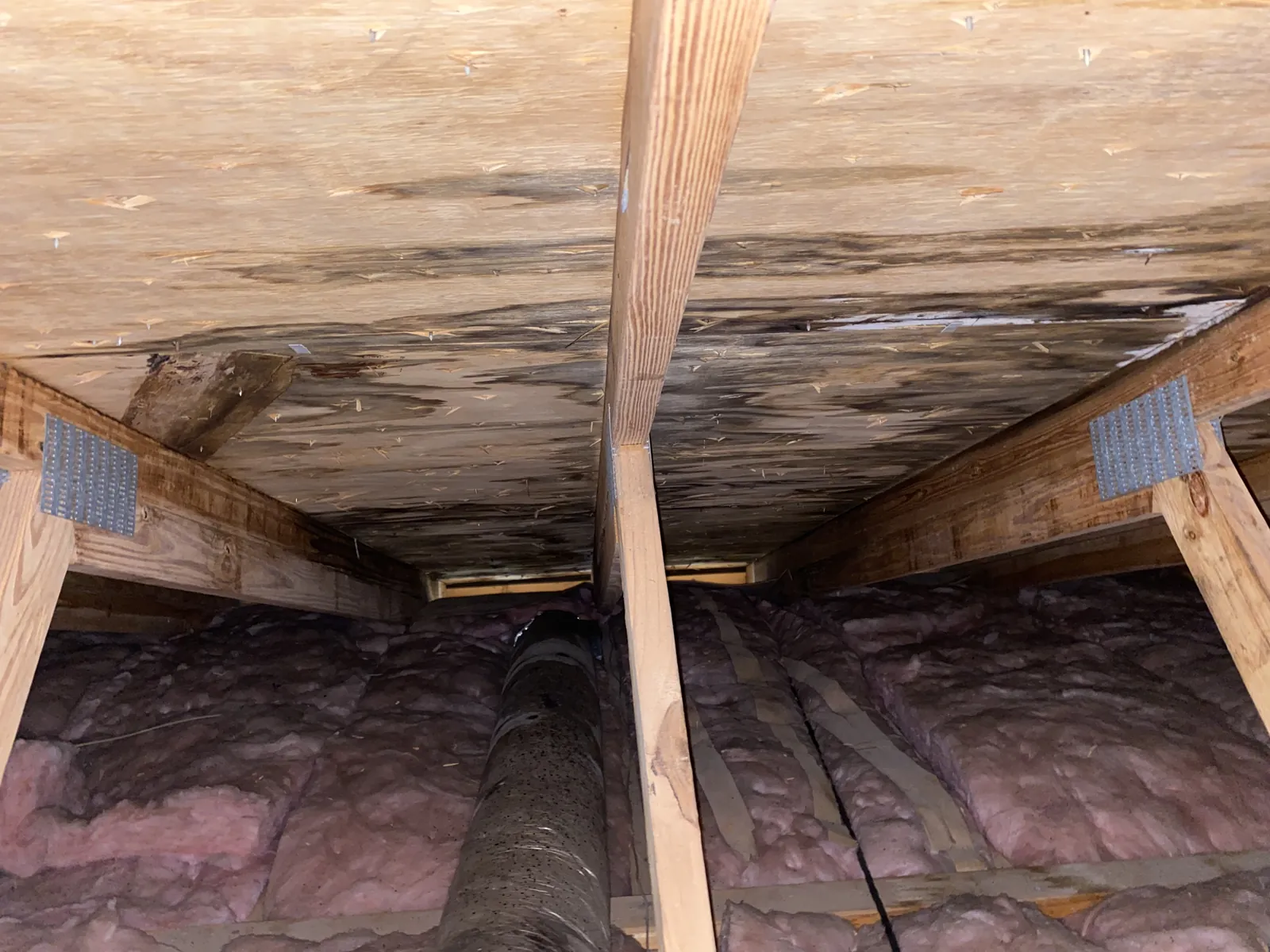
Insurance pays for what you can prove. Before you mop a floor, move a soaked rug, or throw anything away, capture the scene. Take wide shots of each damaged room and the exterior, then close-ups of the breach, the wet ceiling, the ruined contents, and any debris or fallen limbs. Note the date and time of the storm, and keep every receipt for tarps, buckets, fans, and emergency labor. Most homeowner policies expect you to take reasonable steps to prevent further damage, and they reimburse those mitigation costs when you have the records to back them up. A thorough record at this stage is what turns a stressful loss into a smooth, well-supported claim. When you are ready, we walk customers through storm damage and insurance claims from the first photo to the final inspection.
Why a professional tarp beats a DIY tarp
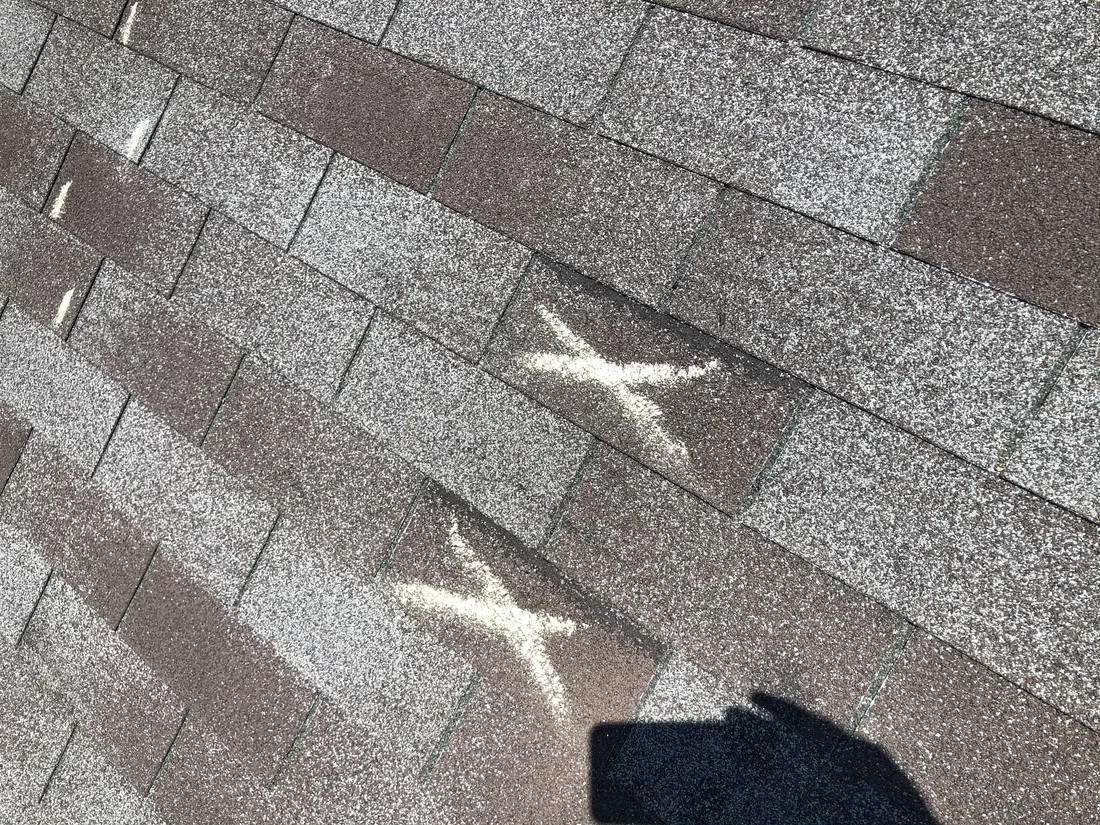
A blue tarp from the hardware store flapping over a ridge does almost nothing. Within a day or two the wind works it loose, water runs underneath, and you are back where you started, often with a bigger wet area than before. A professional emergency tarp is installed differently: the right size of reinforced material, lapped over the ridge so water sheds away from the opening, anchored to solid framing with sealed fasteners, and braced so wind cannot peel it. It is the difference between covering a roof and actually sealing it.
| What matters | Professional emergency tarp | DIY tarp |
|---|---|---|
| Keeps water out through the next storm | Yes | No |
| Anchored to solid framing, sealed fasteners | Yes | No |
| Installed with proper fall protection | Yes | No |
| Documented for your insurance claim | Yes | No |
| Holds up for weeks until the repair | Yes | No |
From tarp to permanent repair
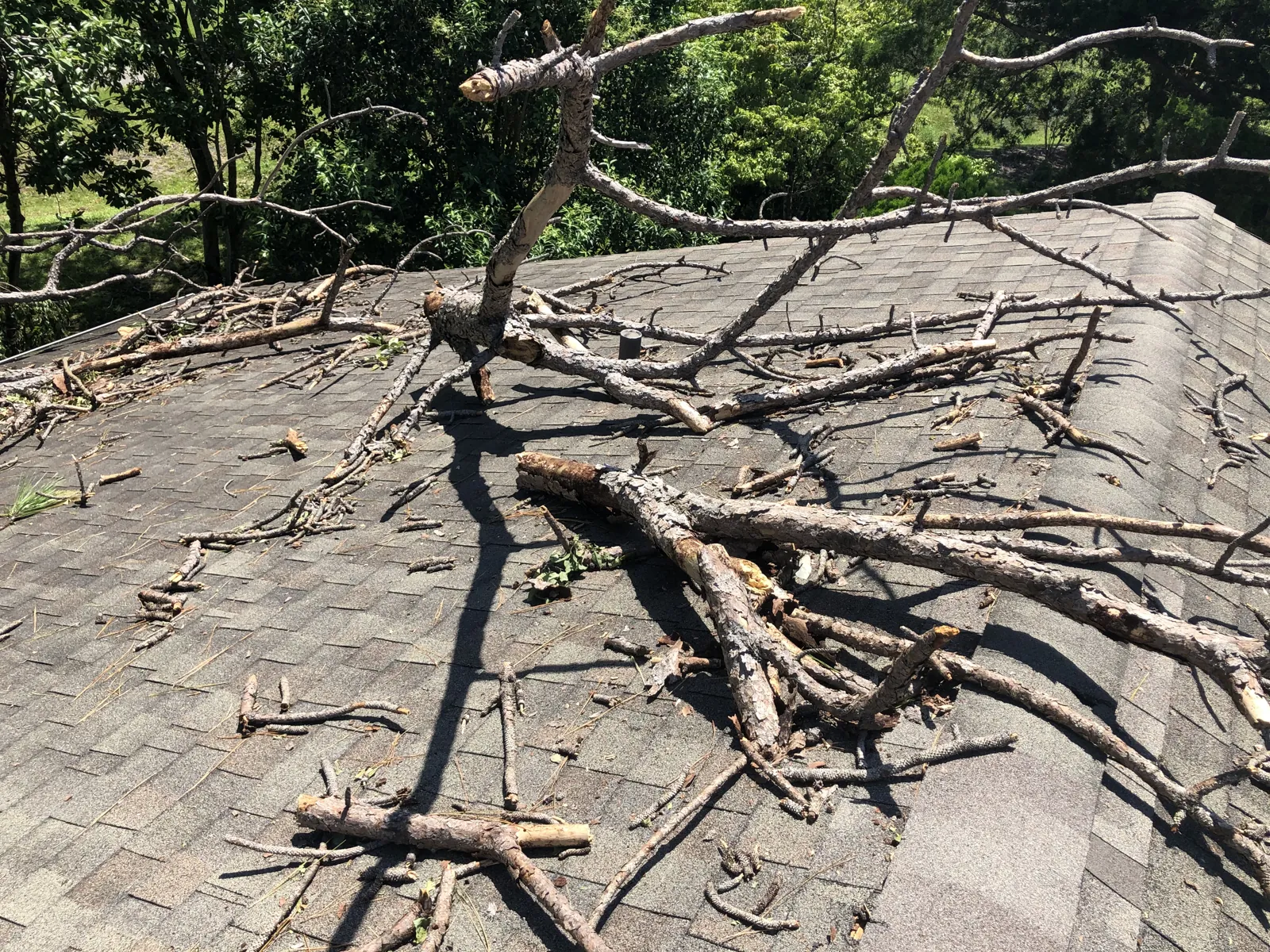
A tarp is a stopgap, not the cure. It buys you a dry, stable house so the permanent work can be planned and done right rather than rushed in the rain. Once the roof is sealed, a roofer can fully assess the deck, underlayment, and shingles, write an accurate scope, and coordinate the repair with your insurance carrier. Acting fast on the tarp protects the claim too, because it shows you took reasonable steps to prevent further damage. If you have an active leak right now, do not wait for business hours; our emergency roof repair team responds the same day, and West Texas homeowners can reach us directly for emergency roof repair in Lubbock.
Talk to a local roofing expert
Active leak or a roof torn open by the storm? Get a fifth-generation, family-owned crew on the line now. We tarp fast, document the damage for your claim, and plan the permanent fix.
Get My Free Estimate → Or call us(844) 585-7663Frequently Asked Questions
What should I do first when my roof is leaking during a storm?
Protect people before property. Keep everyone out of rooms with sagging or water-stained ceilings, shut off electricity to any wet area, and stay off the roof. Then move belongings out of the drip zone, set buckets under active leaks, and carefully drain any bulging ceiling so it does not collapse. Photograph the damage, then call a licensed roofer for same-day emergency tarping. Do not try to climb up and patch the roof yourself in the weather.
Should I tarp my own roof after a storm?
We strongly advise against it. Wet, storm-damaged shingles are slick and unstable, and roof falls cause serious injuries every storm season. A DIY tarp also tends to come loose within a day or two, letting water run underneath and spread the damage. A professional crew uses fall protection and anchors a properly sized tarp to solid framing with sealed fasteners so it actually sheds water and holds until the repair. Focus your effort on safely limiting water inside, and leave the roof to a crew.
Will my homeowners insurance pay for emergency tarping?
In most cases, yes. Standard homeowner policies include a duty to take reasonable steps to prevent further damage after a covered loss, and the cost of emergency tarping is typically reimbursed as part of that mitigation. Coverage depends on your specific policy and the cause of the damage, so keep every receipt and photograph the damage before and after the tarp goes on. We document the work so it can be submitted with your claim, and we help you walk through the process with your carrier.
How long can a tarp stay on a roof?
Think weeks, not months. A professionally installed tarp is built to withstand wind and rain through the gap between the storm and the permanent repair, but it is still temporary material exposed to sun and weather. The longer it stays, the more it degrades, so schedule the real repair as soon as the roof is sealed and the claim is moving. A loose DIY tarp may not even last through the next storm.
How fast can you get out for emergency tarping?
For an active leak or an open roof, we respond the same day whenever possible. Call (844) 585-7663 and tell us what you are seeing, and we will get a crew moving to seal the roof, stop the water, and document the damage for your insurance claim. The faster the roof is covered, the less water gets into your walls, ceilings, and belongings.
Keep Reading
Storm Damage? We Tarp Fast.
Let a fifth-generation, family-owned crew seal your roof the same day, document every bit of damage for your claim, and plan the permanent repair. One call gets it moving.