
 Materials & Cost
Roof Repair or Replacement: How to Know Which You Need
Not every problem roof needs to come off. Here is how to weigh age, damage, and what is happening underneath, so you spend on the right fix instead of guessing.



 Licensed & Insured
NC #85568
By Patriots’ Roofing · Updated June 2026 · Materials & Cost
TL;DR: Repair when the damage is recent, isolated to one area, and the roof still has years of rated life left. Replace when the roof is near the end of its material lifespan, the damage is widespread across multiple slopes, leaks keep coming back, or the decking underneath is wet or rotted. The deciding factors are roof age versus lifespan, how localized the damage is and where it sits, whether leaks recur, the condition of the shingle surface, and what the deck looks like. The only way to settle it with certainty is a free on-roof inspection.
Roof repair or replacement: the short version
The honest answer is that it depends on a handful of specific factors, and a good roofer can usually tell you which way it leans within minutes of getting on the roof. A repair makes sense when the rest of the roof is sound and the problem is contained, like a few shingles blown off in a wind gust or a flashing detail that was never sealed right. A replacement makes sense when the roof has reached the end of its useful life or the damage is too widespread to chase one patch at a time. The trap most homeowners fall into is paying for repeated repairs on a roof that is past saving, or replacing a roof that had years left. Knowing the difference comes down to reading the roof correctly.
The factors that actually decide
Forget the rule of thumb you heard from a neighbor. Whether you repair or replace turns on the specifics of your roof, not a blanket age cutoff. These are the factors a careful inspector weighs, roughly in the order that matters.
Roof age versus material lifespan
Age is the first thing to check, but only against the rated lifespan of what is actually on your roof. A quality architectural asphalt shingle is engineered for decades of service; a builder-grade three-tab roof gives you far less. If your roof is in the back third of its rated life and showing real wear, a repair is often money spent on borrowed time, because the rest of the surface is aging too and the next failure is rarely far behind. If the roof is young and the damage is from a single event, repair is usually the smart call. The question is not just “how old is it” but “how much rated life is left, and is the whole surface wearing out together.”
Is the damage isolated or widespread?
This is the single biggest swing factor. Damage confined to one slope, one valley, or a small section is almost always a repair. Damage scattered across several slopes, both sides of the ridge, or the entire field of the roof points hard toward replacement, because patching one area on a uniformly worn or storm-hit roof just moves the next leak a few feet over. A roof that needs five separate repairs in different places is telling you it is ready to be replaced as a system.
Where the damage is located
Location matters as much as size. A problem at a penetration, a pipe boot, a vent, a skylight, or a flashing transition, is frequently a clean, durable repair because those are predictable failure points that can be rebuilt without touching the field shingles. Damage out in the open field of the roof, or along the eaves and edges where wind uplift starts, is harder to repair invisibly and more likely to signal a broader problem. A leak directly over a structural area or a finished living space also raises the stakes on getting the fix exactly right.
Recurring leaks and what they signal
One leak in one spot is a repair. The same ceiling stain coming back after it was “fixed,” or new leaks appearing in different rooms over a season or two, is a different story. Recurring leaks usually mean water is getting in at multiple points, or that the underlayment and seals across the roof have given out, not just at the one place you can see staining inside. When a roof starts leaking in more than one location, the surface has generally reached the point where chasing individual leaks costs more over time than replacing the system once.
Granule loss, curling, and missing shingles
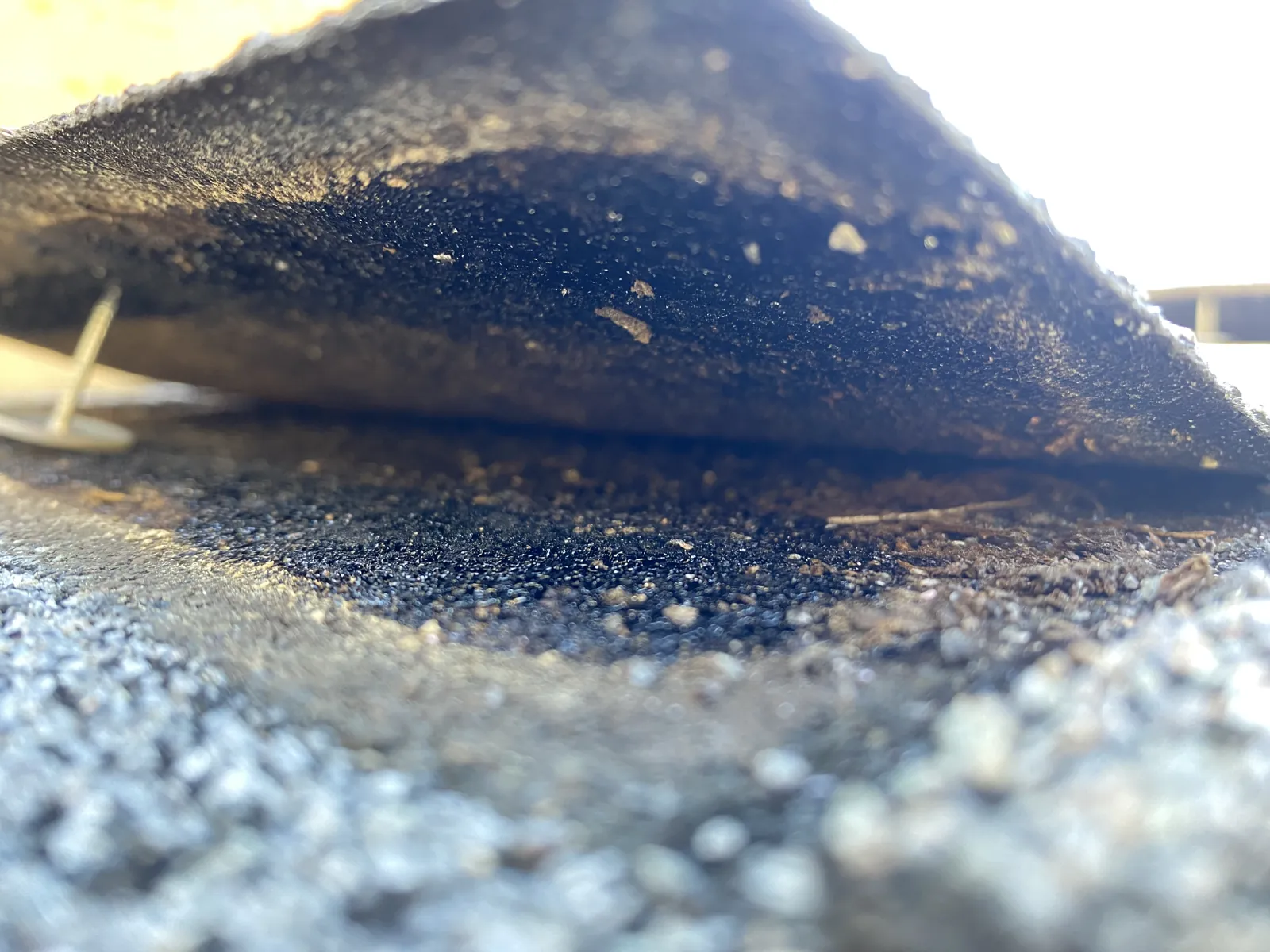
The shingle surface tells you how much life is left. Heavy granule loss (bald, shiny, or dark patches, and granules piling up at the downspouts) means the protective layer is gone and the asphalt underneath is exposed to UV and weather. Curling, cupping, or clawing edges mean the shingles have dried out and lost their flexibility. A few missing shingles can be replaced, but widespread granule loss and curling across the roof are end-of-life signs that no patch reverses. If you can see these conditions on most of the slopes, you are looking at a replacement.
Decking and structural problems
What is under the shingles is the factor homeowners almost never see, and the one that most often forces a replacement. If water has been getting in long enough to soften, rot, or delaminate the plywood or OSB decking, or if you see sagging, daylight through the boards in the attic, or a spongy feel underfoot, the problem is no longer just the surface. Compromised decking has to be opened up and replaced, and at that point a full reroof is usually the sound, lasting answer. A roof can look fixable from the top and still be failing from the deck up.
Still not sure which one you need?
The fastest way to a real answer is to have someone get on the roof, look at every slope, and tell you straight. Our roof inspection is free, with no obligation and no pressure to replace.
Get My Free Estimate → Or call us(844) 585-7663When a repair is the right call
Plenty of roofs do not need to be replaced, and a contractor who tells you otherwise on a sound roof is not doing you a favor. A roof repair is genuinely the right answer when the roof is reasonably young, the rest of the surface is in good shape, and the damage is contained. The classic repair cases are a handful of shingles lost in a wind gust, a failed pipe boot or vent seal, a flashing detail that leaks at a chimney or wall, or a single area of impact damage on an otherwise healthy roof. In those situations a clean, well-executed repair restores the roof and buys you the full remaining life of the system. The test is simple: if the repair area is isolated, the surrounding shingles still have plenty of granule and flexibility, and the decking is dry, fix it and move on.
When replacement makes more sense
A roof replacement wins when repairs would just be a series of expensive stalls. That is the case when the roof is near or past the end of its rated life, when granule loss and curling cover most of the slopes, when leaks keep returning in new places, or when the decking is wet or rotted. It is also usually the better long-term decision when widespread storm damage has hit multiple slopes at once, because matching new shingles into a large field of aged ones rarely looks right and rarely lasts. Replacing the roof as a system restarts the clock, restores the manufacturer warranty, and ends the cycle of chasing the next leak. When you add up what repeated patches would cost against a roof that is fundamentally worn out, replacement is often the more economical path, not just the more durable one.
The insurance angle: sudden storm damage versus gradual wear
If a storm is in the picture, the repair-or-replace question gets a second layer, because insurance draws a hard line between sudden, accidental damage and gradual wear. Homeowners policies are built to cover sudden events like hail, wind, and fallen limbs, and when a storm causes enough damage, a carrier will often pay to replace a roof rather than repair it, especially when matching new shingles to old is not practical. What insurance does not cover is age and deferred maintenance: a roof that simply wore out is the homeowner’s responsibility. That distinction is exactly why documentation matters. When damage is from a storm, every affected slope should be photographed and recorded so the claim reflects the true scope, and you are not pushed toward a partial repair when the policy actually supports a full replacement. We handle that documentation as part of storm damage and insurance claims, and if you suspect a recent storm is behind your roof trouble, our guide on how to tell if your roof has hail damage walks you through the signs. For a deeper look at what is and is not covered, see does homeowners insurance cover roof replacement.
How a free inspection settles it
Every factor above points to the same conclusion: you cannot decide this from the driveway, and you should not decide it from a sales pitch. The clearest answer comes from a thorough roof inspection, on the roof, slope by slope, with the attic and decking checked from below. A real inspection reads the granule condition, the seals, the flashings, the penetrations, and the deck, then gives you a plain recommendation backed by photos: repair this area, or replace the system, and here is exactly why. There is no cost and no obligation, and a good inspector will tell you to repair when repair is right, even though a replacement is the bigger job.
Patriots’ Roofing has read a lot of roofs. We are a family-owned company, fifth generation, founded by the O’Brien family in 1836, and we are GAF President’s Club and Master Elite, BBB A+ accredited, with a 4.9 rating on Google. That track record means we tell you the truth about your roof, whether the answer is a small repair or a full replacement. Request a free inspection and get a straight answer instead of a guess.
Frequently Asked Questions
Should I repair or replace my roof?
Repair when the damage is recent, isolated to one area, and the rest of the roof is sound with years of rated life left. Replace when the roof is near the end of its lifespan, the damage is spread across multiple slopes, leaks keep coming back, or the decking underneath is wet or rotted. The decision turns on roof age, how localized the damage is, whether leaks recur, the shingle condition, and the state of the deck. A free on-roof inspection is the reliable way to know which one your roof needs.
How old does a roof have to be before replacement makes more sense?
There is no single age cutoff, because it depends on the material and how the roof has weathered. A quality architectural shingle roof lasts decades, while builder-grade three-tab lasts far less, so the real question is how much rated life is left and whether the whole surface is wearing out together. Once a roof is in the back third of its rated life and showing widespread granule loss or curling, repairs tend to be money spent on borrowed time, and replacement is usually the sounder decision.
Can one bad leak mean I need a whole new roof?
Not usually. A single leak in one location, especially at a flashing, vent, pipe boot, or skylight, is typically a clean repair. What signals a bigger problem is recurring leaks, the same stain returning after a fix or new leaks appearing in different rooms, which often means water is entering at multiple points or the underlayment and seals across the roof have failed. One leak is a repair; a pattern of leaks points toward replacement.
Will insurance pay to replace my roof instead of repairing it?
It can, when the damage is from a sudden, covered event like hail or wind and the scope is large enough that matching new shingles to old is not practical. Homeowners policies cover sudden, accidental damage but not age or wear, so a roof that simply wore out is the owner’s responsibility. Thorough documentation of every storm-affected slope is what determines whether a claim supports a full replacement or just a partial repair, which is why getting it recorded correctly matters.
How do I know for sure which one I need?
The only reliable way is a professional inspection on the roof itself, with the attic and decking checked from below. From the ground you cannot judge granule loss, broken seals, fractured shingles, or soft decking. A thorough inspector walks every slope, reviews the flashings and penetrations, checks the deck, and gives you a plain recommendation backed by photos. Our inspection is free and carries no obligation, and we will tell you to repair when repair is the right call.
Get a Straight Answer on Your Roof
Let a fifth-generation, family-owned crew get on the roof, check every slope and the deck, and tell you plainly whether to repair or replace. One free inspection settles it.