
 Materials & Cost
Standing Seam vs Exposed-Fastener Metal Roofing for Coastal Homes
On the salt-air coast, the way a metal roof is fastened matters as much as the metal itself; here is how concealed-fastener standing seam stacks up against through-fastened panels.

 Licensed & Insured
NC #85568
By Patriots’ Roofing · Updated June 2026 · Materials & Cost
TL;DR: For homes on the coast, concealed-fastener standing seam metal is the stronger choice. Its fasteners hide under the panels, so salt air cannot reach them and there are no screw holes to leak. Exposed-fastener metal costs less up front but relies on thousands of rubber-washered screws that corrode, back out, and need re-tightening near salt water. Standing seam lasts longer, sheds wind-driven rain better, and looks cleaner, which is why we recommend it for coastal homes.
If you are pricing a metal roof near the water, the first decision is not the color or even the metal gauge. It is whether the panels are fastened with hidden clips (standing seam) or screwed straight through the face (exposed-fastener). That single choice drives how the roof handles salt air, wind-driven rain, and decades of thermal movement. This guide walks through the real differences in the standing seam vs exposed fastener metal debate so you can spend your money where it counts on the coast.
The core difference: where the fasteners live
Both systems are roll-formed metal panels, usually steel or aluminum, run vertically up the roof. What separates them is how they attach to the deck.
Standing seam uses concealed clips. The clips screw to the roof deck, and the panel edges fold up into raised vertical seams that lock or crimp together over the clips. Once it is buttoned up, there is not a single fastener head sitting out in the weather. Water runs down the flat of the panel and the seams stand above the water line.
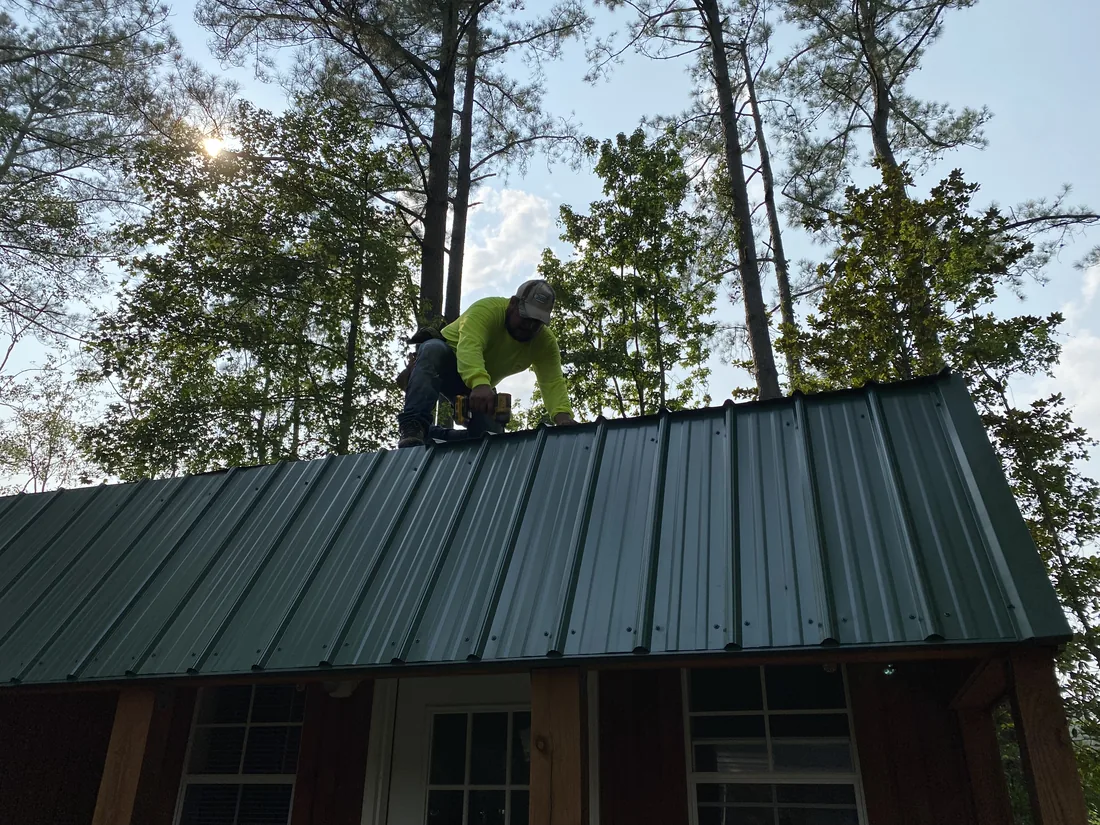
Exposed-fastener panels (you may hear them called through-fastened, R-panel, 5V crimp, corrugated, or ag-panel) are screwed straight through the face of the metal into the deck or purlins. Each screw uses a small rubber or neoprene washer to seal the hole. A typical home roof can carry several thousand of these screws, and every one of them is a penetration through your weather barrier.
Why the coast is hard on exposed fasteners
Salt air is relentless. It settles on every surface, holds moisture against the metal, and speeds up corrosion. On an exposed-fastener roof, the most vulnerable parts are the very things holding the roof down.
- Fastener heads corrode. Even coated screws sit in salt spray year-round. As the heads rust, the seal around them weakens.
- Washers dry out and back out. The neoprene washers under each screw cycle through heat and cold every single day. Over the years they harden, crack, and let go. Salt accelerates the breakdown.
- Holes elongate. Metal expands and contracts with temperature. Because each screw pins the panel tight to the deck, that movement slowly wallows out the screw holes, loosening the seal.
- Every screw is a leak candidate. Multiply one tired washer by a few thousand fasteners and you have a roof that needs re-screwing every 10 to 20 years to stay watertight on the coast.
Standing seam sidesteps all of this. The clips are protected under the panels, the seams ride above the water, and the clips are designed to let the metal expand and contract freely instead of fighting it.
Standing seam vs exposed-fastener: side by side
| Factor | Standing Seam (concealed) | Exposed-Fastener |
|---|---|---|
| Hidden fasteners, no exposed screw holes | Yes | No |
| Handles salt-air corrosion well | Yes | No |
| Allows free thermal movement via clips | Yes | No |
| Top-tier wind-uplift ratings | Yes | No |
| Lowest upfront cost | No | Yes |
| 40-plus year service life | Yes | No |
| Low long-term maintenance | Yes | No |
| Clean, architectural look | Yes | No |
Water-tightness and wind uplift
Coastal storms test a roof in two ways at once: they push water uphill with wind-driven rain, and they try to peel the roof off with uplift. Standing seam answers both. With no face penetrations, there is simply nowhere for driven rain to enter on the field of the roof, and the raised seams keep water moving toward the eave. For uplift, the concealed clip system is engineered to grip the panels while still flexing with the metal, and standing seam assemblies carry some of the highest tested wind ratings in residential roofing.
Exposed-fastener panels can be installed to meet code, but their hold-down depends entirely on screws and washers staying tight. Near the water, where those screws are the first thing to corrode, that is a harder promise to keep over 30 years. If you want the roof engineered to a documented storm standard, a metal roof can be installed to qualify as a FORTIFIED roof, which sets specific requirements for the deck, the underlayment, and how the system resists uplift.
Cost, looks, and lifespan
Exposed-fastener metal is the budget option. It uses less labor and simpler panels, so it carries a lower upfront cost; that is its real strength. The trade-off is a shorter practical lifespan on the coast and a maintenance schedule of re-tightening or replacing fasteners down the road.
Standing seam costs more to install because the panels and clips cost more and the work is more precise. In return you get a roof that commonly lasts 40 to 70 years with very little upkeep, plus the clean, modern lines a lot of homeowners want. Exposed-fastener roofs, with their visible rows of screws and a more utilitarian profile, read as agricultural or industrial, which is fine for a barn and less ideal for a primary residence.
When exposed-fastener metal still makes sense
We will not pretend through-fastened panels have no place. For a detached garage, a workshop, a barn, a carport, or any outbuilding where budget matters more than a 50-year horizon, exposed-fastener metal is a perfectly reasonable call. It is also common well inland, away from constant salt exposure. The closer a structure sits to salt water, and the more it is the home you plan to keep, the more the math tilts toward standing seam.
Our recommendation for coastal homes
For a primary residence anywhere near the water, we recommend concealed-fastener standing seam. You pay more once and stop worrying about screw rows, corroded heads, and re-fastening schedules. If you are weighing options for a beach house or a place near the Sound, see our guide to metal roofing on the Outer Banks, and review the full range of profiles, gauges, and finishes on our metal roofing page. We will walk your roof, talk through your budget honestly, and price the system that actually fits where you live.
Talk to a local roofing expert
Not sure which metal system fits your home and your coastline? Our team will assess your roof, your exposure, and your budget, then give you a straight recommendation and a free written estimate.
Get My Free Estimate →Or call us(844) 585-7663Frequently Asked Questions
Is standing seam or exposed-fastener metal better for a coastal home?
For a coastal home, standing seam is the better choice. Its fasteners are hidden under the panels, so salt air cannot corrode them and there are no exposed screw holes to leak. Exposed-fastener metal costs less but relies on thousands of face screws that degrade faster near salt water.
Why do exposed fasteners fail faster near salt water?
Salt air holds moisture against the metal and speeds up corrosion. On an exposed-fastener roof, the screw heads rust and the rubber washers under them dry out, crack, and back out as the metal expands and contracts. Each loose or corroded fastener becomes a potential leak point, so coastal roofs often need re-screwing every 10 to 20 years.
How long does a standing seam metal roof last on the coast?
A properly installed standing seam metal roof commonly lasts 40 to 70 years with very little maintenance, even in coastal conditions, because the fasteners are concealed and the clips let the metal move freely. Exposed-fastener roofs typically deliver a shorter practical service life near salt water and require ongoing fastener upkeep.
Is exposed-fastener metal ever a good choice?
Yes. For barns, garages, workshops, carports, and other outbuildings, or for structures well inland away from constant salt exposure, exposed-fastener metal is a sound, budget-friendly option. The closer a building sits to salt water and the longer you plan to keep it, the more standing seam pays off.
Can a metal roof be installed to FORTIFIED standards?
Yes. A metal roof can be installed to qualify as a FORTIFIED roof, which sets documented requirements for the roof deck, the underlayment, and how the system resists wind uplift. It is a strong option for coastal homeowners who want their roof built and verified to a recognized storm-resistance standard.
Build it once, build it for the coast
Patriots’ Roofing is a GAF Master Elite and President’s Club contractor with an A+ BBB rating and a 4.9 Google score. Let us spec the right metal roof for your home and your salt-air exposure.