
 Insurance & Claims
Storm Damage and Roof Insurance Claims in Abilene
Big Country hail and straight-line wind are a matter of when, not if. Here is what the 2014 Abilene hailstorm taught this region, how the roof insurance claims process actually works, and how to keep the storm chasers off your roof.



 Licensed & Insured
NC #85568
By Patriots’ Roofing · Updated July 2026 · Insurance & Claims
TL;DR: Abilene and the Big Country sit deep in Texas hail country, and the June 12, 2014 hailstorm that hammered downtown and the north side showed how much one afternoon can change a roof. After any hail or wind event, write down the storm date, get a free documented inspection before you call your carrier, and file only if the damage is real and clears your deductible. Never sign with an out-of-town crew knocking doors the day after a storm, and remember that Texas law does not allow any contractor to waive your deductible.
Why the Big Country takes so many hits
Abilene sits where the rolling plains climb toward the Callahan Divide, right in the path of the spring dryline. When that boundary between dry desert air and humid Gulf air sharpens on a May or June afternoon, supercell thunderstorms fire along it and march across Taylor, Jones, and Callahan counties with two weapons at once: large hail grown in a violent updraft, and straight-line winds that slam down out of the storm’s collapsing core.
The wind side of that pairing gets less attention than the hail, but it does real work on Big Country roofs. The National Weather Service issues a severe thunderstorm warning when winds reach 58 mph, and storms in this region clear that bar every spring. Gusts like that crease shingle tabs, break the seal strips that hold courses down, and peel back edges and ridge caps, damage that often will not leak until months later. The NWS office in San Angelo covers Abilene, and its warning maps each spring tell the same story: this is a place where roofs get tested.
June 12, 2014: the hailstorm Abilene still remembers
Every conversation about storm damage in Abilene eventually comes back to one date. On the afternoon of June 12, 2014, a supercell dropped south across the city, an unusual track that parked the hail core squarely over the north side and downtown. The National Weather Service documented hail to baseball size, with the largest stones measured at more than four inches across, falling while the annual Children’s Art and Literacy Festival was underway downtown; several people suffered minor injuries.
The damage footprint was enormous. Homes and businesses across the north side lost roofs, windows, and siding. The storm knocked out windows across the Hardin-Simmons University campus, left widespread roof damage at Abilene Christian University, put a city fire station out of service, and battered hundreds of vehicles, including a large share of the city’s own fleet. It stands as one of the costliest single-day storms in the city’s history, and repair work on some downtown buildings stretched on for years. Researchers with the National Severe Storms Laboratory later collected dozens of additional large-hail reports across the city as part of a post-storm verification study, a measure of just how widespread the core was.
The lesson for homeowners is not that 2014 was a freak. It is that the same setup, a dryline supercell with a big updraft, rolls the dice over the Big Country multiple times every spring. Most years the core misses the city. Some years it does not.
What hail and wind damage look like on an Abilene roof
The frustrating thing about storm damage here is how little of it you can see from the driveway. Hail bruises shingles rather than punching holes in them, and wind damage hides along edges and ridges. Here is what we look for on every inspection, and what you can safely check from the ground.
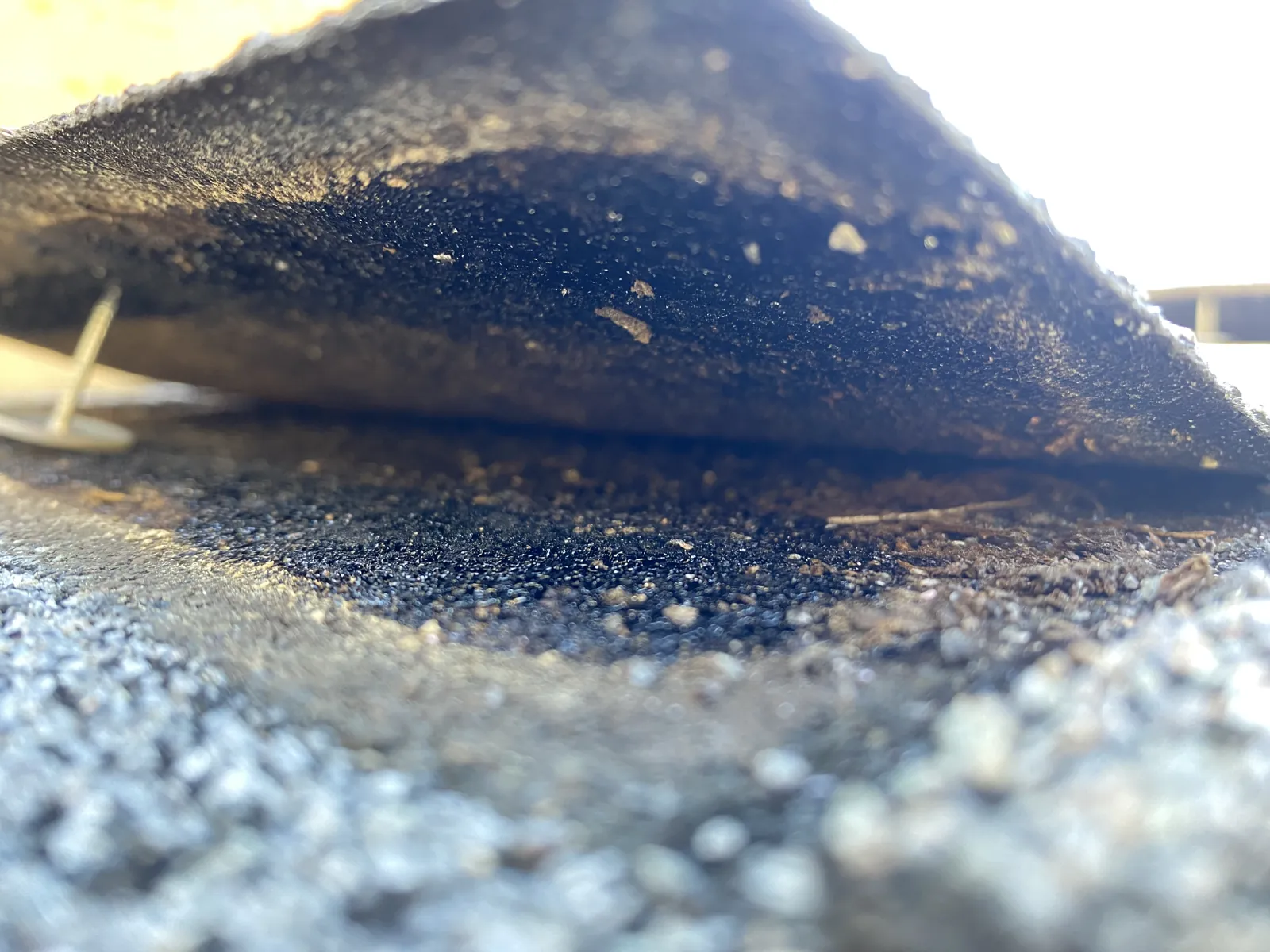
- Bruising and granule loss. Hail knocks the protective granules loose and fractures the mat underneath. Watch for granules piling up at downspouts and bare, shiny patches on shingles.
- Dented soft metals. Gutters, downspouts, vents, and flashing dent before shingles do. Dings in the metal are the most reliable ground-level proof that hail hit hard at your address.
- Creased or lifted shingles. Straight-line wind folds shingle tabs back and breaks their seal. A creased shingle may lie back down and look fine, but it is no longer attached the way it should be.
- Collateral clues. Splatter marks on fences and decks, damaged window screens, and dinged air-conditioner fins all confirm the storm’s intensity and help date the loss.
- Interior warning signs. New ceiling stains or a musty attic after a storm mean water is already getting in, and the repair should not wait for claim paperwork.
How the insurance claims process works
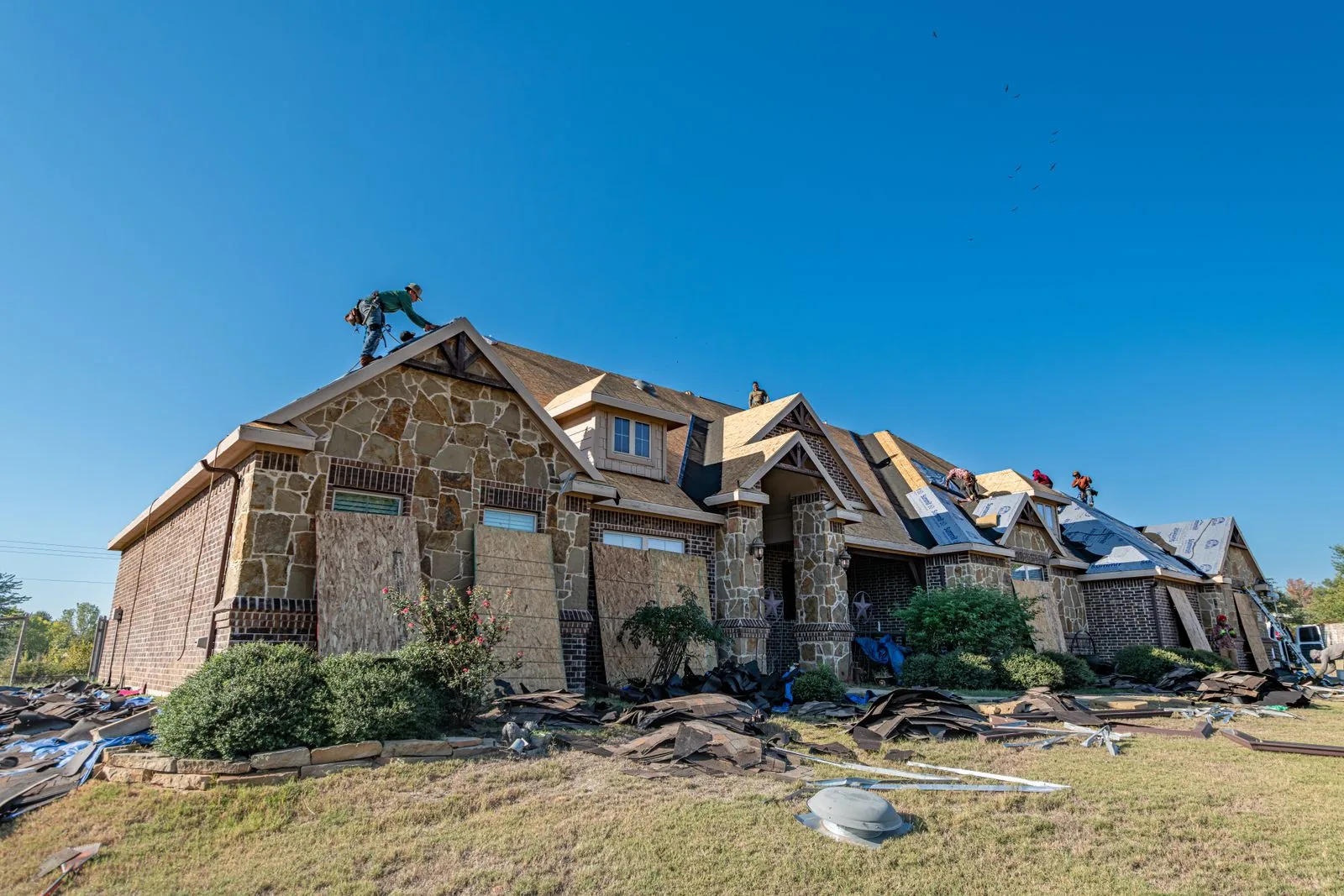
The claims process is the same whether the storm hit Sayles Boulevard or a ranch house outside Tuscola, and it goes best when the homework is done before the carrier is ever on the phone. Our storm damage and insurance claims team handles this work every week, and the full playbook is in our step-by-step guide to filing a roof insurance claim after a hail storm. The short version for Abilene homeowners:
- Tie the damage to a date. Carriers connect every claim to a specific storm. Write down when the hail or wind hit; the event will be in the NWS records for your address.
- Get a free, documented inspection first. Before calling your carrier, have a roofer walk every slope, mark each impact, and photograph everything. Now you know what is actually up there.
- Decide whether filing makes sense. If the damage is isolated and minor, a claim may not be worth putting on your record. If bruising is widespread and the soft metals are dented, filing is usually the right call.
- File and meet the adjuster on the roof. Report the loss before your policy’s deadline, then have your contractor on the roof with the adjuster so both see the same marked damage and nothing gets underscoped.
- Review the scope and rebuild to code. Go through the approved scope line by line, supplement anything legitimate the first estimate missed, and have the roof rebuilt to current code by a certified crew.
Think the last storm hit your roof?
A free, photo-documented inspection tells you exactly where your roof stands before any claim is on your record. If the damage is not real, we will tell you that too.
Get My Free Estimate →Or call us(844) 585-7663The second storm: chasers who follow the hail
Within a day or two of any well-publicized Big Country hail event, a wave of out-of-town crews rolls in behind it. Some are legitimate. Many are not, and the pattern is familiar to anyone who lived through the weeks after June 2014: unmarked trucks, a clipboard on the doorstep, and pressure to sign something before the crew moves on to the next street. The pitch works because the storm is fresh and the fear of a leak is real. These are the signs to slow down:
- No local footprint. Out-of-state plates, no physical address you can visit, and a phone number that will not answer in six months when the warranty question comes up.
- Sign-today pressure. Storm damage does not expire in a week. Any pitch built on signing an agreement the day of the knock is built that way for the company’s benefit, not yours.
- An offer to waive your deductible. Texas law has made it illegal for a contractor to waive, absorb, or rebate an insurance deductible since 2019. A company that opens with a crime is telling you how it operates.
- Large cash deposit up front. A common pattern after major hail events is a big deposit collected, then a crew that never returns.
- Vague paperwork. No written scope, no proof of liability and workers’ comp insurance, no named warranty. Everything about a storm claim should be in writing.
The fix is boring and effective: verify a local presence, ask for references from your own area, and read our guide on how to choose a roofing contractor before anyone’s ladder touches your gutter. A legitimate roof problem will still be a legitimate roof problem next week.
Serving Dyess AFB families and the whole Big Country
Abilene is a military town, and we are proud to serve the airmen, veterans, first responders, and military families around Dyess AFB on the city’s southwest side. Military life adds a wrinkle to storm claims: deployments and PCS timelines do not pause for an adjuster’s schedule. So we put every finding in writing, photograph everything, and walk whoever is home through each step, so a claim can move forward even when one spouse is halfway around the world. If a PCS is coming, a documented, properly closed-out roof claim also keeps a home sale from stalling over an unresolved storm loss.
That same approach covers every neighborhood we work in, from the 2014-scarred north side to new builds south of the loop. You can see everything we do locally on our Abilene roofing page, and every inspection starts the same way: free, documented, and honest about whether the damage is worth a claim at all.
Frequently Asked Questions
How bad was the June 12, 2014 Abilene hailstorm?
It was one of the worst storms in the city’s history. A supercell tracked south across Abilene on the afternoon of June 12, 2014, dropping baseball-sized hail, with the largest stones documented at more than four inches across, on the north side and downtown while a children’s festival was underway. Homes, businesses, vehicles, a fire station, and both university campuses took damage, and repair work on some buildings continued for years afterward.
What size hail can damage a roof in Abilene?
Hail around one inch across, roughly quarter size, can bruise asphalt shingles, and smaller stones driven by strong wind can do damage too, especially on older roofs. That damage is usually invisible from the ground because it shows up as bruising and granule loss rather than obvious holes. If hail of an inch or larger fell at your address, a roof-level inspection is worth it even when the roof looks fine from the driveway.
Can a roofing contractor waive my insurance deductible in Texas?
No. Texas law makes it illegal for a contractor to waive, absorb, rebate, or otherwise offset an insurance deductible, and it has since 2019. An offer to eat the deductible is one of the most reliable storm-chaser red flags in the Big Country. Homeowners are expected to pay their deductible, and carriers can require reasonable proof that it was paid before releasing final claim funds.
Should I file an insurance claim after every Abilene hailstorm?
No. File when a documented inspection shows real, widespread damage that clearly exceeds your deductible. Isolated cosmetic dents may not be worth a claim on your record. Start with a free inspection so you know what is on the roof before you call your carrier, and if the damage is real, file promptly, because most policies expect notice within a set window, commonly one year from the date of loss.
Do you work with Dyess AFB families?
Yes. We proudly serve the airmen, veterans, first responders, and military families around Dyess AFB and across Abilene. We schedule inspections around deployments and PCS timelines, put every finding in writing with full photo documentation, and walk whoever is home through the claim step by step, so the process does not stall because one spouse is away.
After the Storm, Get a Straight Answer
Our fifth-generation, family-owned company, founded by the O’Brien family in 1836, has been reading storm-hit roofs for generations. One free, documented inspection tells you exactly where your Abilene roof stands.